The practical answer.
Specify a startup pulse as a timed waveform at a named connector, together with its repetition interval, battery conditions and minimum acceptable host voltage. A bare peak-current number is incomplete. The finished pack must be evaluated for voltage support, protection response and repeated-event heating, using the approved equipment and harness or an agreed equivalent load.
- Peak amplitude without pulse duration is not an operating requirement.
- Record battery voltage and host voltage alongside current.
- Normal startup capability must remain within the approved protection design.
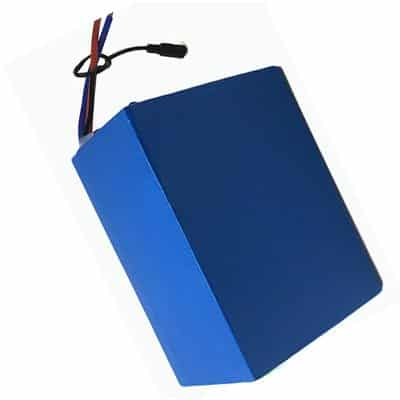
Name the event before assigning a current rating
Startup is not a single electrical behavior. Charging input capacitors, accelerating a motor and waking several electronic modules can produce different waveforms. State what causes the event and whether it occurs only at initial connection, after every sleep interval, or during automatic restart. If an actuator can stall, treat that as a separate operating or fault condition rather than silently including it in a routine startup allowance.
Give the supplier a trace where possible. A maximum meter display may miss a short event, and a high sample rate alone does not establish measurement bandwidth or probe accuracy. Ask the test owner to document the measurement chain and time alignment. The commercial requirement should preserve the meaningful waveform rather than reduce every event to whichever single number is easiest to quote.
Use a pulse envelope that a supplier can reproduce
Define the current before the pulse, its rise behavior, the high-current interval and the return to normal operation. State how closely an equivalent electronic load must represent the host. Some loads demand power rather than a fixed current as voltage falls, which changes the stress during startup. Include any permitted retries; a host that attempts to restart repeatedly can create a materially different thermal duty from one isolated event.
The following entries are requirement fields, not recommended limits. The responsible pack and equipment engineers should agree numerical values and tolerances from the application. Preserve the waveform file with its units and revision so a later sample test is not based on a screenshot with an unreadable time scale.
| Field | Why it changes the decision |
|---|---|
| Peak current and measurement boundary | Defines the demand seen by the pack or host connector |
| Duration and rise behavior | Distinguishes short inrush from a sustained overload |
| Repetition and retry pattern | Captures cumulative heating and incomplete recovery |
| Lowest acceptable host voltage | Links the pulse to actual equipment operation |
| State of charge and temperature | Makes comparison conditions explicit |
| Harness and firmware revision | Preserves the installed system that produced the waveform |
Distinguish voltage sag, protective interruption and host reset
Three failures can look identical to an operator: the equipment restarts, refuses to boot, or turns off. Electrically they may differ. The pack can remain connected while terminal voltage falls under load. A protection function can interrupt the output. Or the pack output can remain adequate while voltage drop in the installed path causes the host's own undervoltage logic to act. Each mechanism calls for different evidence.
Request synchronized current, pack-terminal voltage and host-input voltage. Where the approved interface exposes diagnostic events, preserve those timestamps too. Texas Instruments' BQ76952 documentation illustrates that overcurrent, short-circuit, voltage and temperature protections are distinct functions. That is an example of protection architecture, not a statement that Jetray uses this component or that its settings apply to any catalog pack.
Do not solve a nuisance interruption by assuming a longer protection delay is acceptable. The permitted operating envelope must remain coordinated with cells, interconnects, switching devices and the equipment fault response. Ask the supplier to explain the validated normal-operation boundary without disclosing or changing safety settings through an informal purchasing conversation.
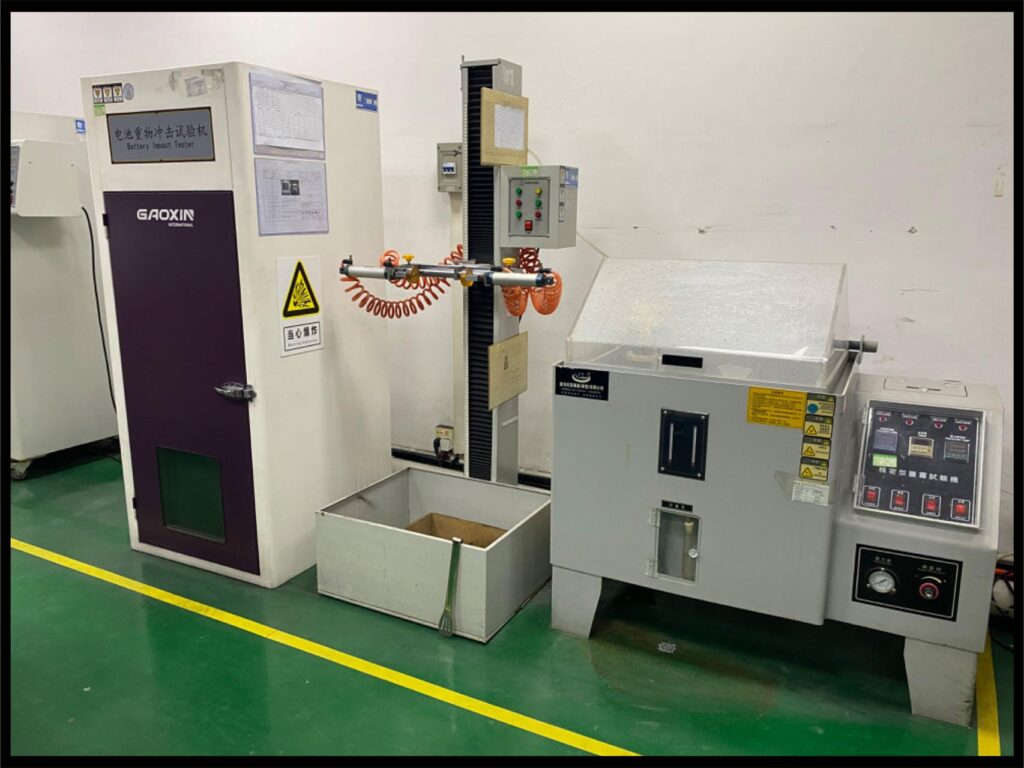
Calculate pulse energy without mistaking it for pulse capability
For an illustrative rectangular demand of 200 W lasting 0.5 seconds, energy is 200 multiplied by 0.5 divided by 3600, or about 0.028 Wh. This small contribution to mission energy says little about whether the pack can deliver the current at an acceptable voltage. It is entirely possible for runtime arithmetic to look comfortable while the first startup event prevents the mission from beginning.
Repetition adds another dimension. A single short pulse and the same pulse repeated frequently have different average demand and heating implications. Keep both the energy calculation and the waveform requirement. Do not infer a universal pulse-to-continuous rating ratio; the approved duration and recovery conditions belong to the exact finished-pack design.
Agree an evaluation matrix around the real risk
Choose conditions that can reveal the application's limiting behavior. These may include the lowest permitted starting charge, relevant cold and warm states, the approved longest harness, and a restart after normal operation has warmed the enclosure. The matrix should be selected by risk and the permitted product envelope, not by an article's generic numerical threshold. Test work belongs with qualified personnel and appropriate protective equipment.
Define pass criteria before observing a sample. Completion of startup, minimum host voltage, absence of unintended reset and correct response to an unavailable-start condition can all matter. Separate normal operation from fault verification. A repeatable non-start under prohibited conditions may be the intended protective behavior, whereas an unexplained reset inside the approved operating envelope remains a deviation.
- Classify each startup or restart event and freeze its waveform.
- Agree the pulse envelope and installed harness with the supplier.
- Record current, pack voltage, host voltage and available event status together.
- Review the stopping mechanism and acceptance criteria before changing the design.
Procurement questions before approving a reference pack
Is a cell's discharge rating the pack's pulse rating?
No. A finished pack includes protection electronics, interconnects and an external interface. Its approved operating envelope must cover the whole assembly. Request a pack-level response rather than multiplying a cell rating and assuming every other current-path element has the same capability.
What should accompany an inquiry?
Send the current trace, voltage limits, event frequency, environmental range and harness drawing. The linked lithium-ion references provide concrete starting points for discussion, but no pulse capability is inferred from their photographs or capacity labels. Ask for the current specification, a project-specific evaluation plan and written deviations before approving the sample.
Sources & further reading
- Texas Instruments: BQ76952 datasheet, protection subsystem overview ↗
- Keysight: DC electronic load operating modes ↗
- Jetray: lithium-ion battery pack catalog ↗
- Jetray: corporate factory photo source ↗
AI-assisted editorial content fact-checked against linked primary documentation. The numerical example is illustrative. No particular protection IC, pulse rating, completed test or individual engineering review is attributed to Jetray.
Prepared for the lithium-ion battery packs collection. General engineering guidance does not replace a model-specific datasheet or application validation. Source review: 5 November 2026.